Vaiden,
Memories of a
Part
Click
on The YELLOW Links To
Go To A Bookmark Or To Open A File.
[Ed.
Note: I was blessed to have a wonderful childhood, growing up in
SONGS: Happy Days -- Glory Days -- Those Were The Days
Centerfield – Those Were The Days My Friend
–
Summer of ‘69
Trivia Ring Around the Rosie
Don
Knotts
07/21/1924 –
02/24/2006


REST IN PEACE
Don Knotts, who won five Emmys for portraying the bungling
deputy Barney Fife on the hit television program "The Andy Griffith
Show," has died at age 81, a spokesman said on
Saturday. Knotts died on Friday night
(02/24/2006) at
Knotts' bug-eyed, high-strung
character helped make "The Andy Griffith Show," a sitcom about a
folksy sheriff in small-town
After leaving "Andy Griffith," Knotts had a string of comedy movies,
including "The Ghost and Mr. Chicken," "The Incredible Mr.
Limpet," "The Reluctant Astronaut" and "The Shakiest Gun in
the West." He also paired with comedian Tim Conway in "The
Apple Dumpling Gang" and its sequel in the 1970s.
Knotts'
career idled for much of the 1970s, during which he hosted an unsuccessful
variety show. He rebounded by playing the desperate-to-be-hip landlord Mr. Furley on the sitcom
"Three's Company" from 1979 through 1984. "To me, he was a genius, a kind gentle
soul," Loralee Knotts, the actor's second wife, said in a telephone
interview. "He made a real contribution to the laughter in this world. I'm
really saddened by his loss. You wouldn't find a kinder, more gentle soul. He
was a comical genius."
In New York, he was a regular on the
soap opera "Search for Tomorrow" and landed a small role in the
Broadway play "No Time for Sergeants," marking the first time he
worked with Griffith, who was the play's star. Griffith and Knotts also
appeared together in the 1958 movie version of "No Time for
Sergeants."
Knotts' Fife loved to flaunt his
authority in small-town Mayberry and always dreamed of solving a big case, but was so inept that
Good-bye, Barney. You were a genius that will always bring a
smile whenever your name is mentioned.
May your gun always be loaded.
Davy Jones
12/30/1945 – 02/29/2012


REST IN PEACE
Here’s 4 Monkees
Songs Sung By Davy
Cuddly Toy She Hangs Out Valleri Daydream Believer
(TV Theme from
Happy Days)
Sunday, Monday, Happy Days
Tuesday, Wednesday, Happy Days
Thursday, Friday, Happy Days
The weekend comes, my Cycle hums,
Ready to race to you
These days are ours, Happy and Free
These days are ours, Share them with me
’Cause nothing can hold me, when I hold you
Feels so right, it can’t be wrong,
Rockin’ and Rolling all week long
Sunday, Monday, Happy Days
Tuesday, Wednesday, Happy Days
Thursday, Friday, Happy Days
Saturday, What a day,
Groovin’ all week with you
These days are ours, Share them with me
These happy days are yours and my
Happy Days
(Sung By Bruce
Springsteen)
I had a friend was a big
baseball player
back in high school
He could throw that speedball by you
Make you look like a fool boy
Saw him the other night at this roadside bar
I was walking in, he was walking out
We went back inside sat down had a few drinks
but all he kept talking about was
Chorus:
Glory days well they'll pass you by
Glory days in the wink of a young girl's eye
Glory days, glory days
Well there's a girl that lives up the block
back in school she could turn all the boy's heads
Sometimes on a Friday I'll stop by
and have a few drinks after she put her kids to bed
Her and her husband Bobby well they split up
I guess it's two years gone by now
We just sit around talking about the old times,
she says when she feels like crying
she starts laughing thinking about
Chorus
Now I think I'm going down to the well tonight
and I'm going to drink till I get my fill
And I hope when I get old I don't sit around thinking about it
but I probably will
Yeah, just sitting back trying to recapture
a little of the glory of, well time slips away
and leaves you with nothing mister but
boring stories of glory days
Chorus (repeat twice)
Those Were The Days
(Theme From All In The Family)
Boy the way Glen Miller played
Songs that made the hit parade.
Guys like us we had it made,
Those were the days.
And you knew who you were then,
Girls were girls and men were men,
Mister we could use a man
Like Herbert Hoover again.
Didn't need no welfare state,
Everybody pulled his weight.
Gee our old LaSalle ran great.
Those were the days.
(Sung By John Fogerty)
Well,
beat the drum and hold the phone - the sun came out today!
We're born again, there's new grass on the field.
A-roundin' third, and headed for home, it's a brown-eyed
handsome man;
Anyone can understand the way I feel.
CHORUS:
Oh, put me in, Coach - I'm ready to play today;
Put me in, Coach - I'm ready to play today;
Look at me, I can be Centerfield.
Well,
I spent some time in the Mudville Nine, watchin' it from the bench;
You know I took some lumps when the Mighty Casey struck out.
So Say Hey Willie, tell Ty Cobb and Joe DiMaggio;
Don't say "it ain't so", you know the time
is now.
CHORUS
Yeah! I got it, I got it!
Got
a beat-up glove, a homemade bat, and brand-new pair of shoes;
You know I think it's time to give this game a ride.
Just to hit the ball and touch 'em all - a moment in
the sun;
(pop) It's gone and you can tell that one goodbye!
CHORUS
CHORUS
Yeah!
[Ed. Note: Was there really a “Mighty
Casey?” Absolutely not. However, “Casey” is immortalized in the
Casey At The Bat
by Ernest L. Thayer, 1888
(Click the
Yellow Text to Listen)
The outlook wasn't brilliant for the Mudville nine
that day;
The score stood four to two, with but one inning more to play,
And then when Cooney died at first, and Barrows did the same,
A pall-like silence fell upon the patrons of the game.
A straggling few got up to go, in deep despair the rest
Clung to that hope which springs eternal in the human breast;
They thought, "If only Casey could but get a whack at that --
We'd put up even money now, with Casey at the bat."
But Flynn preceded Casey, as did also Jimmy Blake,
And the former was a hoodoo, while the latter was a cake;
So upon that stricken multitude grim melancholy sat;
For there seemed but little chance of Casey getting to the bat.
But Flynn let drive a single, to the wonderment of all,
And Blake, the much despised, tore the cover off the ball;
And when the dust had lifted, and men saw what had occurred,
There was Jimmy safe at second and Flynn a-hugging third.
Then from five thousand throats and more there rose a lusty yell;
It rumbled through the valley, it rattled in the dell;
It pounded through on the mountain and recoiled upon the flat,
For Casey, mighty Casey, was advancing to the bat.
There was ease in Casey's manner as he stepped into his place;
There was pride in Casey's bearing and a smile lit Casey's face.
And when, responding to the cheers, he lightly doffed his hat,
No stranger in the crowd could doubt 'twas Casey at the bat.
Ten thousand eyes were on him as he rubbed his hands with dirt.
Five thousand tongues applauded when he wiped them on his shirt.
Then while the writhing pitcher ground the ball into his hip,
And now the leather-covered sphere came hurtling through the air,
And Casey stood a-watching it in haughty grandeur there.
Close by the sturdy batsman the ball unheeded sped --
"That ain't my style," said Casey.
"Strike one!" the umpire said.
From the benches, black with people, there went up a muffled roar,
Like the beating of the storm-waves on a stern and distant shore;
"Kill him! Kill the umpire!" shouted some one
on the stand;
And it's likely they'd have killed him had not Casey raised his hand.
With a smile of Christian charity great Casey's visage shone;
He stilled the rising tumult; he bade the game go on;
He signaled to the pitcher, and once more the dun sphere flew;
But Casey still ignored it, and the umpire said "Strike two!"
"Fraud!" cried the maddened thousands, and echo answered
"Fraud!"
But one scornful look from Casey and the audience was awed.
They saw his face grow stern and cold, they saw his muscles strain,
And they knew that Casey wouldn't let that ball go by again.
The sneer has fled from Casey's lip, the teeth are clenched in
hate;
He pounds with cruel violence his bat upon the plate.
And now the pitcher holds the ball, and now he lets it go,
And now the air is shattered by the force of Casey's blow.
Oh, somewhere in this favored land the sun is shining bright,
The band is playing somewhere, and somewhere hearts are light,
And somewhere men are laughing, and little children shout;
But there is no joy in Mudville -- mighty Casey has
struck out.
When George Hearst decided to run for
senator from
When he went to
In the spring of
When "Casey" made its first
appearance, nobody hailed it with shouts of joy or suspected that it would
become immortal. A few weeks later, (exact date unknown) the
To become immortal, everyone (or thing)
needs a press agent. Archibald Clavering Gunter, an
author of novels, was "Casey's" press agent. Always on the look out for incidents to base some of his novels on,
Gunter, living in
Many weeks later, in August of
Gunter approached Hooper, a good
friend, and offered the poem for him to recite as he felt the baseball teams
would enjoy a comic baseball recitation. Hooper agreed and recited it that
night. The rest, as they say, is history. From that point forward in time,
"Casey" become immortal -- while a good poem to begin with, it took a
recital before a group of "famous" baseball players by a professional
comedian to bring it to life.
After reviews for Hooper's performance
were published, three people came forward to claim authorship and demanded pay
a royalty to use "their" poem. None could prove authorship, so Hooper
kept it in his repertory.
Four or five years later, Thayer,
living in
Newspaper collectors should check their
issues of New York papers for August,
Those Were The Days My Friend
(Sung By Mary
Hopkins)
Once upon a time there was a tavernWhere we used to raise a glass or twoRemember how we laughed away the hoursAnd think of all the great things we would do Chorus: Those were the days, my friendWe thought they'd never endWe'd sing and dance forever and a dayWe'd live the life we chooseWe'd fight and never loseFor we were young and sure to have our wayLa la la la la laLa la la la la la Then the busy years went rushing by usWe lost our starry notions on the wayIf by chance I'd see you in the tavernWe'd smile at one another and we'd say Those were the days, my friendWe thought they'd never endWe'd sing and dance forever and a dayWe'd live the life we chooseWe'd fight and never loseThose were the daysOh, yes, those were the daysLa la la la la laLa la la la la la Just tonight I stood before the tavernNothing seemed the way it used to beIn the glass I saw a strange reflectionWas that lonely woman really me? Those were the days, my friendWe thought they'd never endWe'd sing and dance forever and a dayWe'd live the life we chooseWe'd fight and never loseThose were the daysOh, yes, those were the daysLa la la la la laLa la la la la la Through the door there came familiar laughterI saw your face and heard you call my nameOh, my friend, we're older but no wiserFor in our hearts the dreams are still the same... Those were the days, my friendWe thought they'd never endWe'd sing and dance forever and a dayWe'd live the life we chooseWe'd fight and never loseThose were the daysOh, yes, those were the daysLa la la la la laLa la la la la la
(Sung By Brian
Adams)
Got my first real six stringBought it at the five and dimePlayed it till my fingers bledWas the Summer of '69 Me and some guys from schoolHad a band and we tried real hardJimmy quit and Jody got marriedI should've known we'd never get far Oh when I look back now
That summer seemed to last foreverAnd if I had the choiceYeah - I'd always wanna be there
Those were the best days of my life Ain't no use in complainin'
When you got a job to doSpent my evenin's down at the drive-inAnd that's when I met you - yeah Standin' on your mama's porchYou told me that you'd wait foreverOh and when you held my hand
I knew that it was now or neverThose were the best days of my lifeOh YeahBack in the Summer of '69 Ooh Man we were killin' time
We were young and recklessWe needed to unwindI guess nothin' can last forever - forever, no... And now the times are changin'Look at everything that's come and goneSometimes when I play that old six stringI think about you wonder what went wrong Standin' on your mama's porchYou told me that it'd last foreveroh when you held my hand
I knew that it was now or neverThose were the best days of my lifeOh yeah
Back
in the Summer of '
Newspaper
Cartoon Strips
[Ed. Note:
Many of the Links below are to External Web Sites. I will endeavor to keep the links active
whenever possible.]
Some of My Favorites Over the
Years (Below):
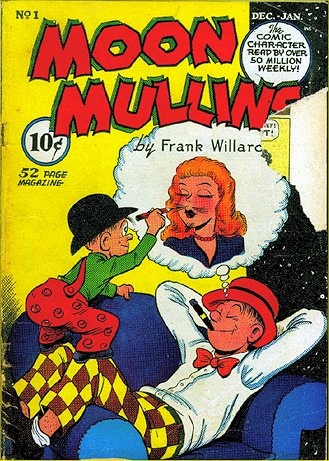
Joe Palooka – Moon Mullins – Bringing Up Father


Gasoline Alley
– Katzenjammer Kids – Barney Google

Snuffy Smith –
Nancy -- History of Nancy – Mutt &
Jeff

Lil’ Abner –
Little Orphan Annie – Dick Tracy
Beetle Bailey
– Sad Sack – Pogo – Little Iodine
Alley Oop – Our Boarding House – Hi & Lois
Popeye – B.C.


“Timer” was the little Yellow
Cowboy Guy that sang “I hanker for a hunk of, a slab, a slice, or chunk of, I
hanker for a hunk of cheese. When my get
up and go, has got up and went, I hanker for a hunk of
cheese. When my
I'm so hungry I can eat a wagon wheel!
Bang, bang, bang!
Oh! Howdy Partner! Time for Timer!
Do you ever get that hungry feeling after school?
Boy, I do! I'm so hungry, I could eat a wagon wheel!
When I'm slow on the draw and I need something to chaw,
I hanker for a hunk of cheese!
When my ten gallon hat's a-feelin' five gallons flat
I've got something planned, which is
Little cheese sandwiches! Come on!
Here's a great little snack to tide you over till dinner!
If you want something that's delicious and nutritious,
cheese is a super snack! Look! A wagon wheel!
When my get up and go has got up and went,
I hanker for a hunk of cheese!
When I'm dancin' the hoedown and my
boots kinda slow down,
Or anytime I'm week in the knees,
I hanker for a hunk of,
A slab, a slice, a chunk of,
A snack that is a winner,
And yet won't spoil my dinner!
I hanker for a hunk of cheese! Ya-hoo!
Click below to see the “Timer”
commercials. You will need Real Player to view these.
And Now…Here it is !!! Hanker for a Hunk of Cheese !!
Hanker for a Hunk of Cheese (slightly clearer version)
NEW ! Peter Griffin from Family Guy meets
Timer
Quick Snack
Sunshine on a Stick
Quickie Breakfast You Are What You
Eat
Another
commercial (non-“Timer”-related) from this time period
is Beans and Rice.
Remember QUISP
cereal? Click HERE to see the commercial. (
And, of
course, there’s the famous Life Cereal commercial with Mikey !
I
Love Lucy
Did you know that the theme to the “I Love Lucy”
television show had words? Most of the
time, we only heard the instrumental version.
Here are the lyrics, and the sound files of the instrumental version and
the version with vocals.
Lyrics to “I
Love Lucy”
I love Lucy and she loves me.
We're as happy as two can be.
Sometimes we quarrel but then... ha ha ha
How we love making up again.
Lucy kisses like no one can. (Lucy kisses
She's my Mrs. and I'm her man.
Life is heaven you see,
Cause I love Lucy,
and I love Lucy,
and Lucy loves me!!
Trivia
Q.: On the
TV Show “Happy Days,” do you remember the name of Richie Cunningham’s older
brother from the first seasons?
A.: Chuck
only appeared in seven episodes. His
name was “Chuck Cunningham,” played by Gavan O'Herlihy in
ADDITIONAL:
Chuck, as played by Gavan O’Herlihy,
appeared in only
Q.: Who was
the rock star that appeared on “Happy Days” as “Leather Tuscadero”
?
A.: Suzi
Quatro (who is a rocker in real life).
Q. What
episode did Richie draw a picture of an eye, a heart, and a sheep (ewe) on the
sidewalk to profess his love to a new girlfriend (meaning “I Love You”) ?
A. Episode
#
Ring Around the
Rosie -- Childhood
Game, or Tale of Death?
Every
child has happily joined hands with friends and recited the familiar nursery
rhyme, "Ring around a rosie, a pocket full of
posies. Ashes, ashes, we all fall down." Few people realize to what this
seemingly happy little nursery rhyme actually refers.
This
nursery rhyme began about
· the purpose of the "pocket
full of posies" is said to by any one of the following:
o Something carried to ward off
the disease.
o A way of masking the
"stench of death."
o An item the dead were commonly
buried with.
o Flowers to place "on a
grave or funeral pyre."
o A representation of the
"pus or infection under the skin in the sores" of plague victims.
Likewise, multiple meanings are
claimed for the repetition of "ashes" at the beginning of the last line:
o A representation of the
sneezing sounds of plague victims.
o A reference to the practice of
burning the bodies of those who succumbed to the plague.
o A reference to the practice of
burning the homes of plague sufferers to prevent spread of disease.
o A reference to the blackish
discoloration of victims' skin from which the term "Black Plague" was
derived.
. . . So . . . Is “Ring Around
the Rosie” a tale of death, or simply a child’s game? You decide.
For More Great Memories, Visit It’s Jerry Time !
[NOTE: Some of these commercials are large files
(20+ mb). Most, however
are 5 - 10mb.
They are in
Microsoft Windows Media Player (.wmv) format, and are for broadband users only.
DO NOT attempt
to watch these with dialup, unless you have a lot of time on your hands.
The following
commercials are arranged under subjects that correspond to those on the Childhood Memories 1 Page.]
TOYS
Mighty Mo Cannon from Deluxe
Johnny Seven O.M.A. (One Man Army)
Rifle from Topper
Whamo Super Ball and Superelasticbubbleplastic
MOVIES
(Although the
Horror of Party Beach is rated as one of the worst B movies ever made, it is a
classic in every sense of the word)
(This is the 2nd
variation of the opening theme]
FOOD AND
CEREAL
Count Chocula, FrankenBerry, and BooBerry Cereal
Nothing Is Better For Thee, Than Me
DRINKS
Royal Crown Cola
w/ Nancy Sinatra
CANDY
Baby Ruth and Butterfinger by Curtiss
GUM
HOME PRODUCTS
AND PERSONAL CARE

Ipana Toothpaste and
Vitalis Hair Tonic
P-s-s-s-s-s-s-s-t Dry Shampoo Review
Old Spice After Shave and Cologne
ICONS
TELEVISION
Green Hornet Meets Batman Preview
Voyage to the
Bottom of the Sea Opening
Captain Kangaroo with Mr. Moose &
Bunny Rabbit
Gilligan’s Island Opening 1 (without
the Professor and Mary Ann)
Gilligan’s Island Opening 2 (with the
Professor and Mary Ann)
Hee Haw (Pf-f-f-f-t You Were Gone)
Johnny Rivers sings Secret Agent Man
Lorne Greene sings theme to Bonanza
The Monkees
sing I’m Gonna
Buy Me A Dog
The Shari Lewis Show Ending (The Song That Doesn’t End)
The Ted Mack Original Amateur
Hour
AUTOMOBILES
BEER
TV
PERSONALITIES
Red Skelton Explains the True Meaning
of the Pledge of Allegiance
Frank Nelson
(Y-e-s-s-s-s-s-s-s)


Frank Nelson on Sanford and Son
Frank Nelson Torments Jack Benny
Frank Nelson as Jack Benny’s Travel
Agent
Kool-Aid appeared first in
bottles as Perkins Kool-Aid

After Perkins found a way to
reduce the liquid to powder, Kool-Aid -
as we know it - was born.

From the powder, came the
famous Kool-Pops
1965 Kool-Pop Commercial featuring the voice of Frank
Nelson
…AND…
The Kool-Aid Smiley Pitcher

SPORTS
December 23, 1972
Steelers’
Franco Harris picks up picks up a fumble from the air off his shoe tops
at the Raiders’ 42 and scores with 5 seconds
left to give the Steelers a 13-7 win
a.k.a. “The Play”
November 20, 1982
After Stanford had taken a 20-19 lead
on a field goal with four seconds left in the game,
the Golden Bears used five lateral
passes on the ensuing kickoff return to score
the winning touchdown and earn a 25-20
victory.
Members of the Stanford Band had come
onto the field midway through the return,
believing that the game was over, which
added to the ensuing confusion.
a.k.a. “The Wind Bowl”
November 19, 1983 Egg Bowl
Steve Sloan’s Ole Miss Rebels were
leading the game late in the fourth quarter with Emory Bellard’s
goal line and a chip shot field goal seemed inevitable.
With 24 seconds remaining,
State kicker Artie Cosby attempted a 27-yard
field goal. The kick looked good and actually
made it through the uprights before a 40
mph wind gust caught the pigskin in stride and sent
it falling
backwards where it landed on the five.
The final score: Ole Miss 24; Miss. State 23.
*** OTHER GREAT FOOTBALL GAME ENDINGS ***
November 30, 2013
With the game
tied at 28 and with one second remaining in regulation, Alabama attempted a
57-yard field
goal. It fell
short, and Auburn defensive back Chris Davis fielded it nine yards deep in his
own
end zone and
returned it 100 yards for a touchdown and a 34–28 Auburn win.
October 17, 2015
All Michigan
had to do was get this punt off and it would hand Michigan State its first loss
of the
season.
Instead, an unfathomable play handed the Wolverines the 27-23 loss. No. 7
Michigan State
stunned No. 12
Michigan in Ann Arbor as time expired, forcing a fumble by the Wolverines’
punter and
returning it for a touchdown
October 31, 2015
With 6 seconds left in the game, kicked off to Miami.
Miami - trailing Duke 24-27 – received the kickoff and
8 laterals later, Miami found the endzone to beat Duke 30-27.
Georgia Tech vs.
Florida State
October 24, 2015
Georgia Tech blocked a last-second FG attempt by FSU's Roberto
Aguayo and
Lance Austin picked it up and took it all the way for the
game-winning TD
November 23, 2017 Egg
Bowl
University of
Mississippi “Ole Miss” Rebels vs. Mississippi State Bulldogs
Following a dislocated ankle injury for Mississippi State
quarterback Nick Fitzgerald early in the first quarter, the unranked Rebels
built a 24-6 third quarter lead over the Bulldogs in Starkville. Despite five
Mississippi State turnovers, true freshman quarterback Keytaon
Thompson would lead the Bulldogs to a unanswered
15-point rally in the fourth quarter to finish the game as a 31-28 loss for
Mississippi State. After scoring a touchdown for Ole Miss in the third quarter,
D.K. Metcalf mocked the home team by mimicking a dog urinating on the Bulldogs'
playing turf, intentionally causing the imposition of a 15-yard unsportsmanlike
conduct penalty against his team. No apology for the behavior was issued by his
Head Coach Matt Luke, the University of Mississippi, or any other responsible
person; and apparently no discipline was imposed on Metcalf or anyone else.
Rather, Metcalf's actions seemed to provide a source of pride and joy
throughout much of the University of Mississippi community. Following the game,
Mississippi State coach Dan Mullen departed to accept the head coaching
position at Florida while the "interim" designation was dropped from
Ole Miss' coach Matt Luke's title.
November 27, 2018 Egg Bowl
University of Mississippi “Ole Miss”
Rebels vs. Mississippi State Bulldogs
This game was notable for a brawl that
occurred at the end of the third quarter. Ole Miss, trailing 28-3, appeared to
score a touchdown to end the quarter. One of the Mississippi State players
continued fighting for the ball long after Ole Miss player A.J. Brown crossed
the goal line with the ball. Players then started to shove each other, and
eventually punches were exchanged and the benches
cleared. Four players, one for Ole Miss and three for Mississippi State, were
ejected, and every player on both teams were given unsportsmanlike conduct
penalties. The touchdown that Brown had appeared to score was then taken off
the board due to time expiring at the end of the quarter. Mississippi State
went on to pick up a 35-3 win in Oxford.
The Piss, the
Miss, and the Double Dismiss
November 28, 2019 Egg Bowl
University of Mississippi “Ole Miss”
Rebels vs. Mississippi State Bulldogs
Ole Miss trailed Mississippi State 21-14
with nine seconds left. Matt Corral completed a 2-yard pass to wide receiver Elijah
Moore for an Ole Miss touchdown with four seconds left. However, Elijah Moore
drew a 15-yard unsportsmanlike conduct penalty for pretending to be a dog
urinating in the end zone following the touchdown. As a result, the extra point
attempt went from being a 20-yard attempt to a 35-yard attempt. The extra point
attempt was missed slightly to the right leading to Mississippi State winning
21-20 and becoming bowl-eligible. In contrast to the
ensuing celebration of D.K. Metcalf's identical gesture during the 2017
contest, a joint public apology for Moore's behavior was issued by Head Coach
Matt Luke and the University of Mississippi Athletics Director although it was
addressed only to "the Ole Miss family," implying their intention not
to apologize to anyone else. In the apology -- in further contrast as to
Metcalf's performance -- Moore's behavior was described as "disappointing
and unacceptable action." Ole Miss fired Coach Luke the following Sunday.
The Rebels were 15–21 in his three seasons as head coach finishing 4–8 in 2019.
In January 2020, Mississippi State would fire Coach Joe Moorhead, citing
off-field issues. The Bulldogs went 14-12 under Coach Moorhead, finishing the
2019 season 6-7 with a loss to Louisville in the Music City Bowl.

(Click on the
Rat Fink to hear the Rat Fink song by The Misfits)
Site Design and Compilation
Copyright © by Ron
Collins. 2020.
