Greenwood
Leflore and Malmaison

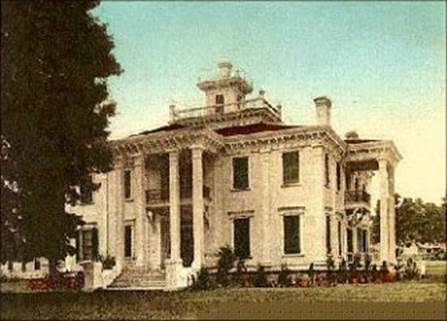
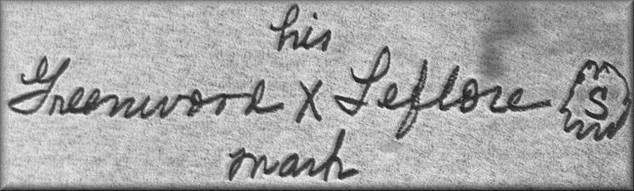
Library
of Congress Photo Description # 1
Library
of Congress Photo Description # 2
Library
of Congress Photo 1
Library
of Congress Photo 2
Library
of Congress Photo 3
Library
of Congress Photo 4
Library
of Congress Photo 5
Library
of Congress Photo 6
Malmaison Engineering Record
Excerpts
from A History of Mississippi,
Vol. 1,
by Richard
Aubrey McLemore, 1973.
Jackson. University & College Press of Mississippi.
[Ed.
Note: The pages and footnotes listed are numbered in the respective chapter(s)
of the book. They are not indicative of any footnote on this web page or
website, nor do they reflect the opinions of the Webmaster.]
P. 80.
On Leflore’s Heritage:
“The
growing mixed-blood community in both Indian nations had far-reaching effects
on tribal economic, social, and political life.
The mixed bloods, more like their Anglo fathers than their Indian
mothers, better understood the ways of the British, Spanish, and later the
Americans. They were more assertive than
their full-blood counterparts and came to comprise a sort of aristocracy in the
tribes. The French legacy among the
Choctaws is confirmed by the LeFlore line which
produced such notables as Greenwood LeFlore.”
--------------
P. 264.
On Leflore and the removal of the Choctaws from Mississippi:
“In
the early months of his administration[President Andrew] Jackson enunciated a
policy which for all practical purposes gave the Indians a choice between
removal or submitting to the laws of thestates.66
Subsequently the Congress of the United States passed a removal measure
endorsing Jackson’s policy.67
Most of the government leaders in Indian affairs also shifted toward a stricter
policy pointed toward eventual removal by force if necessary.68
Caught between the pressures of the federal government and Mississippi, the
frustrated Choctaws and Chickasaws were faced with no choice but consideration
of removal.”69
The
Choctaw leaders assembled for a council to decide on a course of action in the
dilemma which they faced. The views of
Greenwood LeFlore, who had been deposed from his rank
of chief, prevailed in the council, and he was elected chief of the entire
nation of Choctaws to pull all groups together.70
With LeFlore in charge, the way was opened for the
negotiation of a final removal treaty.
66
Richardson,
Messages, II, 1,021
– 1,022
67
DeRosier, The Removal of the Choctaw Indians, 110
– 112.
68
An exception was General Edmund Pendleton Gaines who served with the Army in
the west in the period of Indian negotiation and removal.
He stood staunchly for “fair treatment” and against removal. See James W. Silver, “A Counter-proposal to
the Indian Removal Policy of Andrew Jackson,” Journal
of Mississippi
History, IV, 207
– 215.
69
Ibid., 113;
Grant Foreman, Indian Removal, the
Emigration of the Five Civilized Tribes of Indians, 22
– 23,
193
– 195.
70
DeRosier, The
Removal of the Choctaw Indians, 114.
It should be noted that LeFlore was guilty of
duplicity in that he was ready to expedite emigration of his people while
arranging to stay in Mississippi
himself as a planter on the land he would receive for expediting the removal
treaty.
--------------
P. 205,206.
On
religious and cultural life:
“Methodist
missionary work among the Indians of Mississippi is chiefly an extended shadow
of one man, the Reverend Dr. Alexander Talley.
After nineteen years of labor as a circuit rider, Talley in 1828,
at the request of the Conference, agreed to devote himself to the Choctaws in
northern Mississippi. The Methodist approach to the Indians was
precisely opposite that of the Presbyterians.
Talley believed in the direct method of revivalistic
preaching. This he carried out through
able native interpreters, among whom was the famous chieftain, Greenwood LeFlore, who early came under Talley’s spell.
He even attempted camp meetings among the Choctaws, apparently with
considerable success. Several
of the Indian converts became local preachers
and one, William Winans Oakchiah,
was admitted on trial at the conference of 1831. By 1832, the Methodist Church in Mississippi
was laying claim to four thousand Choctaws “in communion.”
The large accession of Choctaws to the Methodist Church
compares favorably with the small number of Choctaws who identified formally with
other denominations. The wide variance
may be attributed either to the attractive preaching on the partof
Methodists or to the laxity with which they accepted converts, or to both.
Regardless,
as a result of the Indian cessions and their departure for Oklahoma, the Mississippi Conference of1835 reported only eighty-three Indian members.”120
120
Ibid. [Posey, Frontier Mission, 117.];
Cabaniss, “Religion in Ante-bellum Mississippi,”
208.
|
GREENWOOD LEFLORE
 Choctaw Chief Choctaw Chief
Wife - Priscilla Leflore
Children -
Son- John D. Leflore; Daughters- Rebecca Harris,
Jane; Son-in-law- James C. Harris
Grandchildren -
Grandsons- Greenwood L. & John B. Halsey,
Louis Leflore, Greenwood
Leflore, Louis Harris.
Granddaughters- Martha Davis,
Florence Harris.
His cemetery marker reads:
Greenwood Leflore, Born 3 June 1800, Died 31 Aug. 1865
Greenwood LeFlore
was the son of Louis LeFlore
Greenwood's mother was considered
a Choctaw Indian “princess,” and Greenwood was later a chief, even though he
was 3/4 French and 1/4 Choctaw. However, in the Native culture
there were never any "princesses," in that there is no word for
princess in any of the Native languages. That term came about because
early Europeans saw where some women were held in high regard and since the
basis of their experiences were rooted in English royalty,
the word princess was the closest way of describing how they interpreted this
position within the tribe.
|
|
WILL OF GREENWOOD
LEFLORE
 Probated Sept. 1865 Probated Sept. 1865
Carroll Co. Will Bk. A, Pg. 473
Wife- Priscilla Leflore; Son-
John D. Leflore; Daughters- Rebecca Harris, Jane; Son-in-law- James C. Harris; Grandsons-
Greenwood L. & John B. Halsey, Louis Leflore, Greenwood Leflore, Louis
Harris. Mentioned- J. C. Harris, Greenwood Watkins,
Daniel Jefferson, Edward Yarbrough. Granddaughters-
Martha Davis, Florence Harris. Bequeath
to Samuel T. Donley.
Owned lands in Carroll,
Tallahatchie, Yalobusha & Yazoo counties in Mississippi
and some in Texas.
Executor- Tanner C. Harris.
Witnesses- N. H. McCain, Saml. Hart, Wm. A. McCain.
Slaves- Amy, Hampton, William, Lizzie, Willis, Hettie.
Dated May 30,
1860,
probated Sept. 1865.
|
From The Coahomian (Friar’s
Point, Miss.), Page unknown:
October 20, 1865– Colonel Greenwood Leflore died on
the 31stof
August, at his residence in Carroll County, aged sixty-five years.
He was in on[e] sense “the last of the Choctaws”. He claimed his lineage from Choctaw Indians,
although not of full blood. Colonel Leflore was the last chief of the Choctaws.
He remained in this State while his tribe took up their melancholy march to the
lands west of the Mississippi.
From: The Conservative (Carrollton, Carroll
County),P. 1, Cols.
6, 7,April, 1942.
(Photo Unintelligible.)
From Jackson Daily News, P. 1, Col. 5,April 1,
1942.
Greenwood
– (AP) – Historic Malmaison, a Mississippi landmark noted as the home of
Greenwood Leflore, signer of the Treaty of Dancing Rabbit Creek, was destroyed
last night by fire of undetermined origin.
The treaty signed by Leflore, the
last chief of the Choctaw Indians east of the Mississippi river, ceded all the Choctaw
lands in Mississippi
to the Federal government.
The building, located on a hill 11 miles east of Greenwood, was of colonial style and frame
construction. Built in 1852, it was one of the show places of north Mississippi.
From: The Greenwood Commonwealth, April 1, 1942. P. 1. (Photo Unintelligible.)
Historic
Carriage Saved
A Better Photo of
Leflore’s Carriage – now located at
French Camp, MS
Malmaison items on Display at the Cottonlandia Museum at
Greenwood, Mississippi.
The Malmaison
Room is filled with treasures and photographs from the home of
Greenwood Leflore, the last chief of the Choctaw nation east of the Mississippi, a planter
and a Mississippi State Senator. Malmaison, his home
which burned in 1942,was
built about 20 miles from Greenwood in Carroll
County, where fear of
malaria and flooding were lessened by virtue of being in the hills, above the
swampy delta. The home contained only the finest furnishings, many brought from
France,
give us a glimpse of the splendor in which he lived. One example is a drawing
room set of thirty pieces of solid mahogany, finished in genuine gold and
upholstered in priceless silk damask.
Louis LEFLEUR
(Father of Greenwood LeFlore)
Louis Lefleur’s Parents: Henry LEFLEUR and Margaret(UNKNOWN).
Rebecca
Cravat’s Parents: John CRAVAT and (Indian) NEHOTIMA
Louis Lefleur was married to Rebecca CRAVAT (daughter of Choctaw Chief Pushmataha)
about 1790. Children were: William LEFLEUR, Felicity LEFLEUR, Polly
LEFLEUR, Emily LEFLEUR, Winna LEFLEUR, Benjamin
LEFLEUR, Greenwood LEFLORE, Basil L.
LEFLEUR, Andrew Jackson LEFLEUR.
From: The Conservative, Friday, April 10,
1942. P.
1.
Malmaison
Poem
From: The Greenwood Commonwealth, April 1, 1942. Pp. 1,
8. (Photo
Unintelligible.)
Historic Malmaison Completely
Destroyed by Fire Last Night
From: The Jackson Daily News, April 2,
1942. P.
8, Section 2. (Poor quality
image.)
Historic
Landmark Burns
From: The Greenwood Commonwealth, April 1, 1942. Page not available.
Leflore Photo Destroyed in Malmaison
Fire
Greenwood
Leflore and Wife
Greenwood
Leflore’s Carriage
Malmaison’s Remains
Greenwood
Leflore on the Porch of Malmaison
C&G Train Stop
– once located at Malmaison
Choctaws
Purchase Malmaison (.pdf
file)
LeFlore Property Wrapped
Again in Intrigue (.pdf
file)
UPDATE:
On June 3, 2002, I finally had a chance to visit the Cottonlandia Museum in Greenwood. If you have not been there, GO ! The museum is fantastic, and would put many
museums twice its size to shame. I
immediately felt at home when I entered the front door, and was treated like
family while I was there. It would be well
worth the trip from 200
miles away, and it is a great way to
spend an afternoon (or morning). Due to
time constraints, I was only able to stay an hour or so, and could have easily
spent three or four hours looking around.
The staff is excellent, and it is a great place to visit. Pictures of the Malmaison
Room are listed below.
Cottonlandia Malmaison Room
Greenwood
Leflore’s Will
Text of Greenwood Leflore’s Will (.pdf file)
Portrait
of Rebecca Leflore – Circa 1845-1850
Photo
of GreenwoodLeflore
Photo
1 Photo 2
Photo 3
Photo 4
Photo
5 Photo 6
Photo 7
Photo 8
Photo
9 Photo 10
Photo 11
Photo 12
Photo
13 Photo 14
Photo 15
Photo 16
Cottonlandia Brochure (Outside)
Cottonlandia Brochure (Inside)
Cottonlandia Handout


